Your Cart is Empty
NEW THCA FLOWER IN STOCK - FREE SHIPPING ON ALL U.S. ORDERS $100+
NEW THCA FLOWER IN STOCK - FREE SHIPPING ON ALL U.S. ORDERS $100+
NEW THCA FLOWER IN STOCK - FREE SHIPPING ON ALL U.S. ORDERS $100+

October 08, 2019 10 min read
CBD hemp flower has become a popular search topic among people interested in hemp-derived products, cannabidiol (CBD), and cannabis plant chemistry. But what exactly is CBD hemp flower, how does it differ from marijuana flower, and what should consumers know about its cannabinoid content, aroma, quality, and legality?
CBD hemp flower is the flowering portion of a hemp plant cultivated to produce cannabidiol (CBD) while meeting the applicable legal requirements for THC content. It resembles other cannabis flower because hemp and marijuana belong to the same plant species, Cannabis sativa L. However, hemp flower is typically cultivated for a different cannabinoid profile.
CBD hemp flower may contain CBD, smaller amounts of other cannabinoids, aromatic terpenes, and naturally occurring plant compounds. Its composition varies according to the cultivar, growing conditions, harvesting, and processing.
In this guide, we'll explain what CBD hemp flower is, how it differs from marijuana flower, what CBD and THC do, how to evaluate product quality, and what consumers should know about U.S. hemp regulations.
CBD hemp flower refers to the flowering buds of hemp plants cultivated for their cannabidiol content.
These flowers contain naturally occurring plant compounds, including cannabinoids and terpenes. CBD is a non-intoxicating cannabinoid, meaning it does not typically produce the characteristic high associated with delta-9 THC.
CBD hemp flower may contain:
The term CBD hemp flower describes a category of hemp flower rather than a standardized chemical formula. Two products carrying the same general label can have different cannabinoid and terpene profiles.
For this reason, a product's name or appearance is not enough to establish its composition. A current, batch-specific certificate of analysis (COA) provides more useful information.
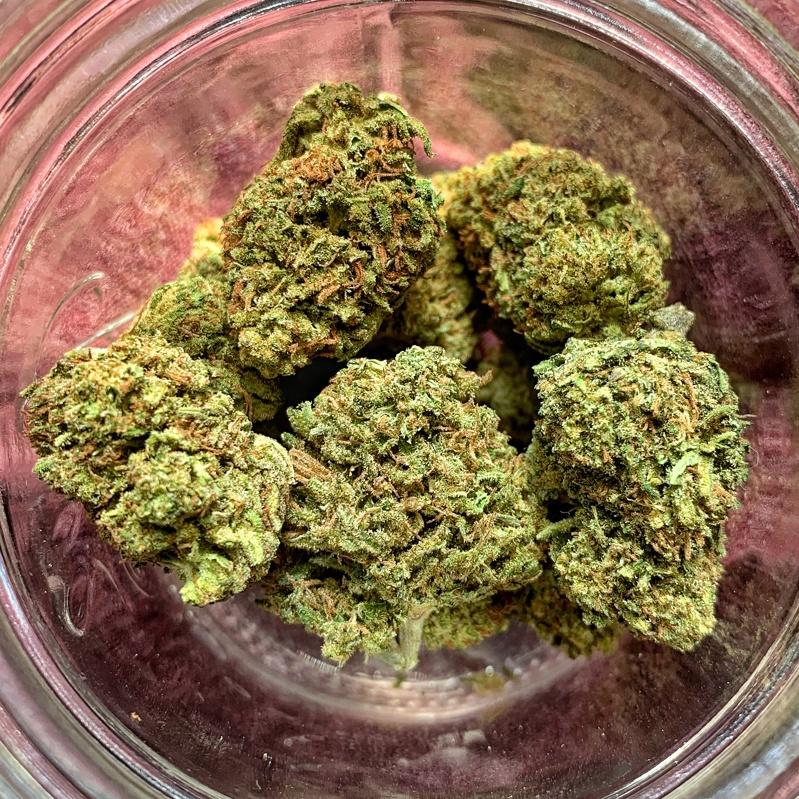
CBD hemp flower generally resembles other cannabis flower. Depending on the cultivar, it may have green or purple coloration, visible trichomes, orange or amber-colored pistils, and a range of bud shapes and sizes.
<text color="secondary" size="sm">Visual appearance varies by cultivar and does not establish CBD concentration, THC content, or product safety.</text>
Several characteristics may be visible when examining hemp flower:
Although these features can describe a flower's appearance, they cannot reliably establish its cannabinoid concentration or determine whether it complies with legal THC limits.
CBD hemp flower and marijuana flower come from the same cannabis plant species. Their main differences relate to cannabinoid composition, cultivation objectives, and legal classification.
| Feature | CBD hemp flower | Marijuana flower |
|---|---|---|
| Plant species | Cannabis sativa L. | Cannabis sativa L. |
| Typical cultivation objective | CBD-rich cannabinoid profile | Often a THC-rich cannabinoid profile |
| CBD content | Often elevated in CBD-focused cultivars | Varies by cultivar |
| THC content | Intended to meet applicable hemp requirements | May contain higher THC concentrations |
| Intoxicating potential | Depends on its complete cannabinoid profile and use | Depends on THC concentration and use |
| Legal classification | Depends on applicable hemp definitions and product requirements | Subject to applicable cannabis laws |
The most important distinction is that hemp and marijuana are not separate botanical species. Their legal treatment depends on the applicable definitions and laws, while their chemical profiles depend on the specific plant and product.
It is also important to understand that a hemp-derived label does not automatically mean a product is non-intoxicating or lawful in every jurisdiction.
Yes. CBD hemp flower can contain THC, even when it is cultivated for a CBD-rich cannabinoid profile.
The amount depends on the plant's genetics, growing conditions, maturity, and testing results. CBD-focused hemp cultivars are generally selected for a different cannabinoid balance than high-THC cannabis cultivars.
However, the term “CBD hemp flower” does not guarantee that a product contains zero THC.
Consumers should distinguish between:
These figures are not interchangeable. A product showing a low delta-9 THC percentage may still have a meaningful THCA concentration.
The CDC notes that CBD itself does not cause a high, but THC-containing products can produce intoxicating effects. A product's full cannabinoid profile is therefore more informative than its CBD label alone.
CBD hemp flower is often discussed in connection with relaxation, wellness, and interest in cannabinoids. However, the evidence for specific health benefits depends on the condition, formulation, and available clinical research.
CBD should not be treated as a proven remedy for every condition promoted in marketing materials.
The U.S. Food and Drug Administration (FDA) has approved a prescription CBD medication for certain seizure disorders. That approval does not mean that unapproved hemp flower or over-the-counter CBD products have been established as effective treatments for other conditions.
When researching CBD hemp flower, it is important to distinguish between consumer experiences, preliminary research, and established clinical evidence.
CBD products can also have side effects and interact with medications. Anyone considering CBD for a health concern should consult a qualified healthcare professional, particularly if they take prescription medications or have an existing medical condition.
CBD hemp flower and CBD oil are different forms of hemp-derived products.
CBD hemp flower is the plant's flowering material. CBD oil is a formulated product that contains CBD in an oil-based preparation or another suitable carrier.
| Feature | CBD hemp flower | CBD oil |
|---|---|---|
| Product form | Dried or otherwise prepared flower | Liquid formulation |
| Composition | Plant material containing multiple naturally occurring compounds | CBD and other ingredients, depending on the formulation |
| Cannabinoid concentration | Varies by flower and batch | Depends on the product's formulation and label |
| Aroma | Often retains a noticeable plant aroma | May have a mild, flavored, or plant-like taste or smell |
| Product verification | Flower-specific laboratory testing | Product-specific laboratory testing |
Neither form is automatically better for every purpose. The appropriate choice depends on the product's intended use, composition, applicable law, and individual circumstances.
Consumers should not assume that CBD oil and CBD hemp flower have identical cannabinoid profiles simply because both are derived from hemp.
Terpenes are naturally occurring aromatic compounds found in many plants, including cannabis. They contribute to the characteristic scents associated with different hemp flower cultivars.
Examples include:
These descriptions are general sensory associations, not guarantees of how an individual product will smell.
Terpene profiles can vary according to cultivar, growing conditions, harvest timing, drying, and storage. Aroma alone does not establish the concentration of CBD or THC, nor does it prove that a product is safe.
A laboratory report that includes terpene analysis can provide more objective information about a specific sample.
Product quality cannot be established by appearance or marketing claims alone. If you are researching CBD hemp flower, consider the following factors.
Look for a current certificate of analysis from a qualified laboratory. Ideally, the report should correspond to the specific product batch.
Depending on the product and applicable requirements, the COA may include:
A COA should identify the tested sample and the laboratory. A generic report or a report for a different batch does not reliably establish the composition of the product being evaluated.
Do not focus exclusively on CBD percentage. Review the reported THC and THCA levels as well as other cannabinoids included in the analysis.
Understanding the full profile helps prevent confusion between CBD content, delta-9 THC, and potential total THC.
Reliable labeling should identify the product, responsible manufacturer or seller, batch information, and relevant warnings.
Be cautious of unsupported claims such as “guaranteed THC-free,” “completely safe,” or “legal everywhere.”
Hemp flower can change during storage. Light, oxygen, temperature, moisture, and handling may affect its condition and chemical composition.
Product documentation and appropriate packaging can provide useful context, but a photograph cannot establish a product's full storage history or current safety.
CBD hemp flower is subject to federal and state requirements. A product's marketing label does not independently establish that its sale, possession, or use is lawful.
Check current regulations before relying on a seller's legal claims.
The legality of CBD hemp flower in the United States depends on the applicable federal definition of hemp, the product's composition, state law, and other relevant requirements.
Under the traditional 2018 Farm Bill framework, hemp was defined using a delta-9 THC threshold of no more than 0.3% by dry weight. That framework did not eliminate all federal or state restrictions on hemp-derived products.
The FDA also retains authority over products containing CBD and other cannabis-derived compounds. A product's hemp classification does not automatically make every intended use lawful under food, drug, or other federal regulations.
Federal legislation enacted in November 2025 established changes to the statutory definition of hemp. As of October 26, 2026, portions of those changes are scheduled to take effect on December 11, 2026, following a subsequent delay.
The revised framework changes how THC is treated in the hemp definition and includes additional restrictions affecting certain hemp-derived cannabinoid products. These changes may have consequences for products previously marketed under the older delta-9 THC threshold.
For CBD hemp flower, the legal assessment may depend on the plant material's total THC concentration, the applicable production requirements, the intended product category, and relevant state law.
Consumers and businesses should consult the latest USDA information, FDA guidance, state regulators, and qualified legal counsel rather than relying on outdated summaries of the 2018 Farm Bill.
CBD hemp flower is not automatically risk-free because it comes from hemp.
Safety depends on the product's composition, possible contaminants, intended use, individual health circumstances, and any applicable regulatory requirements.
Potential concerns include:
CBD may cause adverse effects and can interact with certain medicines. THC can impair attention, coordination, and judgment.
The CDC and FDA provide public-health information about CBD and cannabis-related risks. Their guidance is useful when evaluating claims made by sellers or manufacturers.
Avoid assuming that a product is safe for children, pregnant or breastfeeding individuals, or pets. Keep hemp and cannabinoid products securely stored and consult an appropriate healthcare professional or veterinarian when necessary.
CBD hemp flower is the flowering portion of a hemp plant cultivated for its cannabidiol content. It can contain CBD, varying amounts of THC and THCA, terpenes, and other naturally occurring plant compounds.
CBD itself is not considered intoxicating. However, CBD hemp flower can contain THC, and the amount and form of THC matter. A product's label should not be taken as proof that it cannot produce intoxicating effects.
Both come from the same cannabis plant species. CBD hemp flower is generally cultivated for a CBD-rich cannabinoid profile, while marijuana flower is often associated with higher THC concentrations. Legal classification depends on applicable law.
It can. The amount varies by cultivar and product. Review a batch-specific certificate of analysis for delta-9 THC, THCA, and other relevant cannabinoid measurements.
CBD hemp flower is plant material, while CBD oil is a formulated liquid product containing CBD and potentially other ingredients. Their cannabinoid profiles, concentrations, and regulatory requirements may differ.
Terpenes are aromatic plant compounds that contribute to the smell of hemp flower. Examples include myrcene, limonene, pinene, and beta-caryophyllene. Aroma alone does not establish CBD content or product safety.
Review a current third-party certificate of analysis, check the full cannabinoid profile, examine relevant contaminant testing, and look for transparent product information. Visual appearance alone cannot establish quality.
No single answer applies to every product and situation. Federal and state requirements can differ, and the federal hemp definition is scheduled to change in December 2026. Check current laws in the relevant jurisdiction.
CBD hemp flower is not an FDA-approved medicine. The FDA has approved a prescription medication containing purified CBD for specific seizure disorders, but that approval does not extend to unapproved hemp flower products.
Yes. Depending on the cultivar, hemp flower may contain CBD, CBDA, THC, THCA, and other cannabinoids in varying concentrations. A laboratory report provides a more reliable picture than the product name alone.
CBD hemp flower is a cannabis-derived plant product cultivated for its cannabidiol content. It shares the same botanical origins as marijuana flower but generally has a different cannabinoid profile and may be subject to a different legal framework.
Understanding CBD hemp flower means looking beyond its name and appearance. Cannabinoid testing, terpene information, transparent labeling, appropriate safety screening, and current legal requirements all contribute to a more complete understanding of a product.
For consumers researching CBD hemp flower, the most important takeaway is to distinguish CBD content from THC content, verify product-specific laboratory results, and avoid assuming that hemp-derived products are automatically safe or legal in every context.
Comments will be approved before showing up.